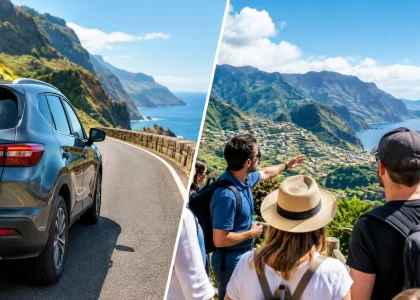

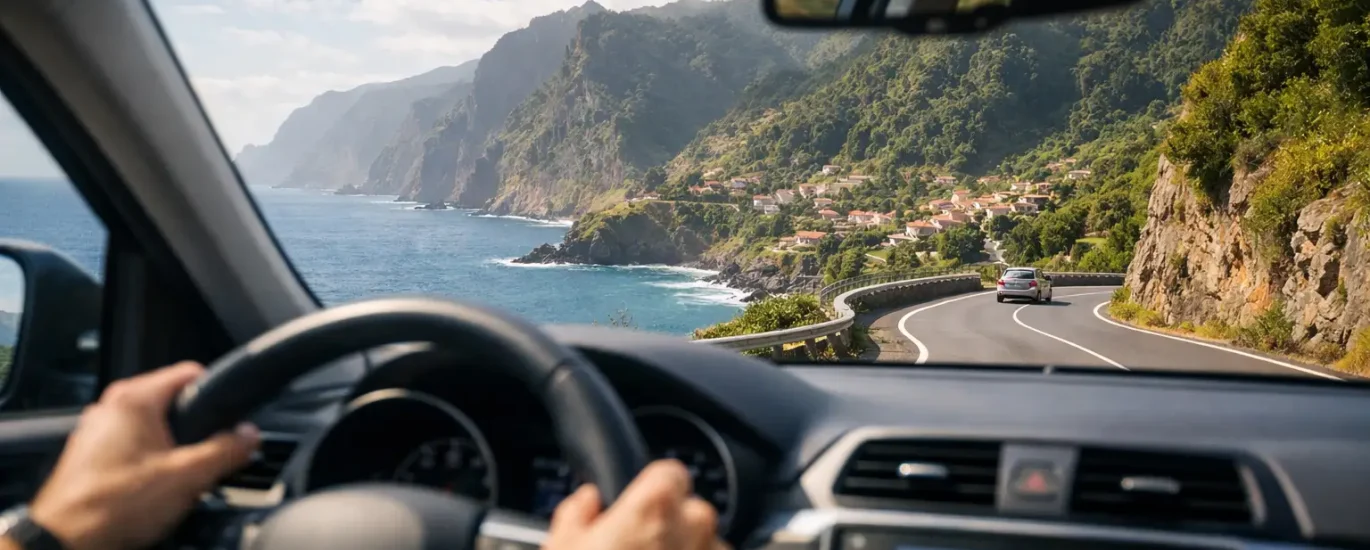
Madeira can take you from a busy waterfront avenue to a mountain viewpoint above the clouds in less than an hour. That freedom is exactly why driving in Madeira is such a rewarding way to see the island. It also calls for a little preparation: the roads are well maintained, but they are steep, winding, and often much narrower than visitors expect.
With the right car, realistic journey times, and a calm approach behind the wheel, driving here is straightforward. It gives you the flexibility to stop for a levada walk, stay for sunset in Ponta do Sol, or take the scenic route to Santana without planning your day around a bus timetable.
What Driving in Madeira Feels Like
Madeira is not a large island, but distances on a map can be misleading. The modern expressway network makes many routes quick, especially between Funchal, the airport, Machico, Santa Cruz, and the south coast. Tunnels cut through mountains that once made travel much slower.
Away from the expressways, the character changes quickly. Older regional roads can be narrow, curvy, and steep, with blind bends, stone walls, parked cars, and occasional sections where two vehicles must pass carefully. These roads are part of the experience, particularly on routes to mountain villages, viewpoints, and the island’s north coast. They simply require more patience than the mileage suggests.
A 20-mile drive may take far longer than it would in the United States. Build extra time into every plan, especially if you are heading to Pico do Arieiro, Curral das Freiras, São Vicente, Porto Moniz, or the more rural parts of the west. Rushing is the one thing that makes Madeira driving unnecessarily stressful.
Start With a Car That Suits Your Trip
A compact car is a practical choice for couples and anyone staying mainly in Funchal or visiting popular coastal towns. It is easier to park and more comfortable on narrow streets. However, a very small engine can feel underpowered when the car is full of passengers and luggage on a steep climb.
For families, friend groups, or travelers planning regular mountain drives, consider a vehicle with enough power for uphill roads and enough room for everyone to travel comfortably. An automatic transmission is often the easier option for visitors who are not used to hill starts, although confident manual drivers may prefer the additional control on steep descents.
Before reserving, think about where you are staying rather than only where you plan to visit. Some hillside hotels, apartments, and villas have sharply sloped access roads or tight parking areas. A larger vehicle offers more space, but it can be less convenient in old town streets and small village parking areas. The best choice depends on your group, luggage, and accommodation.
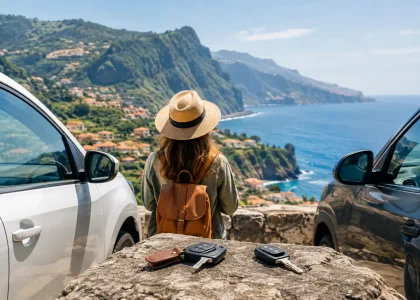
For a more relaxed rental experience, make sure you understand what is included before you arrive. Full insurance, no excess, unlimited mileage, and 24-hour roadside assistance remove common worries when you are driving on unfamiliar roads. Funchal Car Rental also offers airport handover and delivery options around the island, which can make arrival day much simpler for families and late-night flights.
Road Rules Visitors Should Know
Traffic drives on the right in Madeira, as it does across Portugal. Seat belts are required for everyone in the vehicle, and children need an age- and size-appropriate child seat. If you are traveling with young children, arranging a baby seat, child seat, or booster in advance avoids a last-minute problem at collection.
Speed limits are clearly posted and should always be followed. In built-up areas, the common limit is 50 km/h. Limits are generally higher on open roads and expressways, but they vary by road and conditions. Madeira’s tunnels, sharp curves, steep grades, and changing weather mean the posted limit is not always the right speed for the moment.
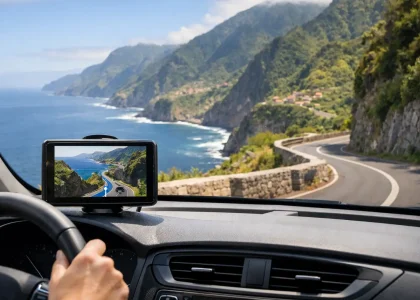
Do not drink and drive. Portugal has strict alcohol rules, and the safest holiday decision is to leave the car parked if you are having wine with lunch or drinks in the evening. Also keep your phone out of your hand while driving. Set your route before leaving, use a properly mounted navigation device if needed, and pull over safely if you need to make changes.
At roundabouts, give priority to traffic already circulating in the roundabout unless signs state otherwise. This is especially useful to remember around Funchal and the airport area, where traffic can be busier during arrival and departure times.
Steep Hills, Tight Streets, and Mountain Roads
The first steep hill can surprise even an experienced driver. On a manual car, use the handbrake for hill starts if that gives you more control. Select a lower gear before climbing rather than waiting until the engine is struggling. When descending, use engine braking and a lower gear instead of relying continuously on the brakes.
On narrow roads, drive slowly and look ahead for passing areas. If another driver is coming toward you, do not feel pressured to squeeze past where there is little room. Often, one vehicle will reverse carefully to a wider point. Local drivers know these roads very well, so give them space if they are waiting behind you and pull over safely when an appropriate opportunity appears.
Mountain weather deserves special attention. Funchal may be warm and sunny while the high ground is foggy, wet, windy, or much cooler. Visibility can change quickly near elevated viewpoints and forest roads. If conditions are poor, there is no harm in changing the plan. Madeira has plenty to offer at lower elevations, and a mountain route is far more enjoyable on a clear day.
Parking Without the Guesswork
Parking is usually easiest when you plan for it before reaching your destination. In central Funchal, hotel garages, public parking lots, and paid street spaces are often more convenient than searching for a free spot. Blue-marked spaces commonly indicate paid parking, so check the nearby signs or payment instructions.
Avoid stopping where curbs, road markings, or signs prohibit it. Yellow markings generally mean no parking or no stopping, and a space that looks open may still block a narrow street, driveway, bus route, or emergency access. In villages and near trailheads, park only where your vehicle is fully off the traffic lane.
At popular places such as Pico do Arieiro, Porto Moniz, Seixal, and major levada trailheads, arriving earlier gives you better parking choices. It also means quieter roads and more time to enjoy the destination without watching the clock.
Plan Routes for Enjoyment, Not Just Speed
Navigation apps are useful in Madeira, but do not follow every shortcut blindly. A route that saves five minutes may send you onto a very steep, narrow lane that is better avoided if you are unfamiliar with the area. When in doubt, stay on main regional roads or the expressway network, even if the route is slightly longer.
A good day behind the wheel usually combines one main destination with a few flexible stops. For example, a west-coast day might include a relaxed drive through Calheta, a stop in Ponta do Sol, and time around Porto Moniz rather than trying to circle the entire island at speed. A north-coast trip can pair São Vicente with Seixal or Santana, leaving room for viewpoints, cafes, and changing weather.
Keep fuel in mind when heading into the mountains or exploring the quieter north and west. Gas stations are available across the island, but it is easier to fill up before a longer day than to search when the fuel light comes on. Carry water, especially for summer drives and hiking days, and keep a light jacket in the car for higher elevations.
Make Arrival Day Easy
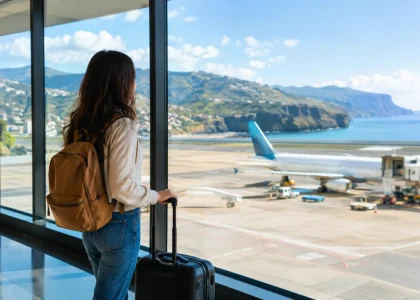
After a flight, the simplest approach is to collect your car at Funchal Airport or arrange delivery to your accommodation. Take a few minutes to adjust the seat and mirrors, understand the controls, and enter your first destination before setting off. If your hotel is in central Funchal, consider using the first evening to settle in rather than tackling a mountain route in the dark.
Ask about any practical details that matter to your trip: how to contact roadside assistance, where to return the vehicle, whether a second driver is included, and what equipment is available for children. Clear rental terms are not a small detail. They let you focus on the island rather than deposits, mileage limits, or unexpected charges.
Madeira rewards unhurried drivers. Leave space in your itinerary for a road that turns out to be beautiful, a viewpoint hidden in the clouds, or a village cafe worth stopping for. With a sensible route and a little confidence on the hills, the car becomes more than transportation – it gives every day of your trip room to unfold.