
Your flight has landed, your bags are collected, and you are ready to head from Funchal Airport to your hotel. The debit card versus credit hire question can suddenly become the one detail standing between you and the keys. Many travelers assume every rental company accepts every card in the same way. In reality, payment rules, security deposits, and insurance terms can vary widely.
For a stress-free Madeira road trip, it helps to understand what debit and credit card payment can mean before you reserve. The right choice is not always about which card is better. It is about choosing a rental arrangement with clear terms that suit your budget, travel plans, and preferred way to pay.
Why payment method matters for Madeira car hire
Madeira is best explored at your own pace. A rental car gives you the freedom to leave Funchal for coastal villages, mountain viewpoints, levada walks, quiet beaches, and restaurants that are not always easy to reach by bus. But the convenience of car hire should not come with a surprise at the rental desk.
Some large rental brands require a credit card in the main driver’s name because they use it to place a substantial security hold. That hold can reduce the available balance on your card for days or even weeks, depending on your bank. For travelers using a debit card, the issue can be more immediate because the held amount may leave their checking account temporarily unavailable.
This is why payment acceptance is only one part of the question. Ask whether the company accepts your card, whether it needs to be in the driver’s name, whether a deposit is required, and what insurance is already included in the quoted price.
Debit card versus credit card hire: the practical difference
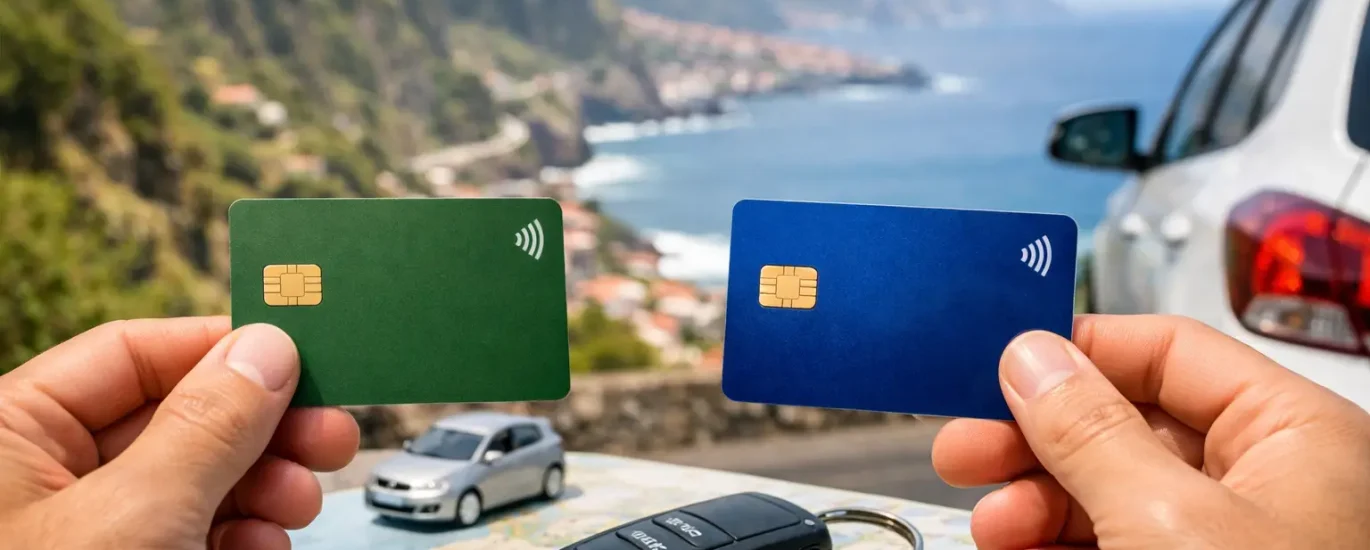
A credit card lets a rental provider place a preauthorization hold against your available credit. No money may leave your account at that moment, but the held amount reduces how much credit you can use elsewhere. This is the traditional system used by many car rental companies to cover potential damage, fuel issues, fines, or other costs.
A debit card draws against money you already have in your bank account. If a rental company places a security deposit on it, that amount can be unavailable for the rest of your trip. This can be inconvenient if you planned to use the same account for accommodation, meals, activities, or emergency expenses.
Neither method is automatically better. A credit card may be useful when a provider requires a large deposit, while a debit card can be a comfortable choice for travelers who prefer not to use credit. The key difference is how the rental company handles risk. When insurance is limited and the excess is high, providers are more likely to rely on a substantial card hold.
The insurance terms can matter more than the card
A low daily rate can look appealing until you reach the payment and insurance details. Some rental offers include basic coverage but leave a high excess, meaning you could still be responsible for a large amount if the car is damaged. The company may then require a credit card deposit equal to that potential liability.
For many vacationers, especially families and first-time Madeira visitors, this is where the rental experience becomes unnecessarily stressful. You may have chosen a debit card specifically to stay within a travel budget, only to find that a large amount of your funds is tied up at pickup.
Look for a price that clearly states what is included. Full insurance, Super CDW, personal accident insurance, local taxes, unlimited mileage, and roadside assistance can make a major difference. A no-excess policy is especially valuable because it can reduce the need for a large damage deposit and gives you greater confidence on Madeira’s narrow roads, steep hills, and winding routes.
At Funchal Car Rental, the stated rental price includes full insurance, Super CDW, personal accident insurance, 24-hour roadside assistance, unlimited mileage, VAT, local taxes, and no excess. Clear inclusions help travelers focus on their plans rather than worrying about expensive add-ons at collection.
When a debit card is a good choice
Using a debit card for car hire can work well when the provider expressly accepts it and explains the conditions in advance. It can be a sensible option for travelers who do not have a credit card, do not want to use one abroad, or simply prefer to pay from a dedicated vacation account.
A debit card is also convenient when the rental price is genuinely all-inclusive and there is no large excess requiring a major hold. Before traveling, make sure the account has enough available funds to cover the rental payment and any agreed deposit. Remember that your bank may apply its own international transaction rules or daily spending limits, even if the rental company accepts the card without issue.
Use the physical card where possible rather than relying only on a phone wallet. Bring a second payment option for personal expenses, and check that the name on the card matches the main driver’s documents. These small steps can prevent avoidable delays after a long flight.
When a credit card may be more convenient
A credit card can offer extra flexibility if a rental provider places a preauthorization hold, since the held amount affects your available credit rather than your checking balance. Some travelers also prefer the purchase protections or travel benefits offered by their card issuer. Those benefits differ by card and may have exclusions, so treat them as a supplement rather than a replacement for understanding the rental company’s insurance.
Credit card hire can be convenient for a longer stay, a larger vehicle, or a booking with a provider that requires a higher security authorization. Still, a credit card does not make unclear rental terms acceptable. If the company cannot clearly explain the excess, insurance coverage, deposit release process, and fees, it is worth looking for a more transparent option.
Also check your available credit before departure. A card with a low limit may not be suitable for a large deposit, particularly if you are also using it to pay for hotels and flights.
Questions to ask before you book
A few direct questions can save a great deal of hassle at pickup. Confirm whether debit cards, credit cards, and cash are accepted. Ask whether payment must be made with a card in the main driver’s name, whether any deposit or preauthorization is required, and whether there are card processing or administration fees.
You should also confirm exactly what the quoted price includes. Ask about insurance excess, roadside assistance, mileage limits, additional drivers, child seats, GPS devices, airport handover, and delivery to your accommodation. If your arrival is late, confirm the collection process before your flight lands.
Read the confirmation carefully once you receive it. A transparent booking should make the important details easy to find, rather than hiding them behind vague language or requiring you to purchase extra protection at the counter.
Plan for a smooth pickup in Madeira
Bring your driver’s license, booking confirmation, and payment card. If you are traveling as a couple or group, decide in advance who will be the main driver and make sure that person has the correct card and documents. If another traveler will drive, arrange for them to be added before setting off.
It is also wise to inspect the vehicle together at handover, take a few clear photos, and ask how to contact roadside assistance if needed. Madeira rewards curious drivers, but its terrain can be unfamiliar. Having the right insurance and support in place means you can enjoy the drive from the start.
The best payment method is the one that comes with terms you understand and costs you can plan for. Choose a rental provider that explains its payment and insurance policy in plain language, then keep your attention where it belongs: on the road ahead, the ocean views, and every memorable stop along the island.