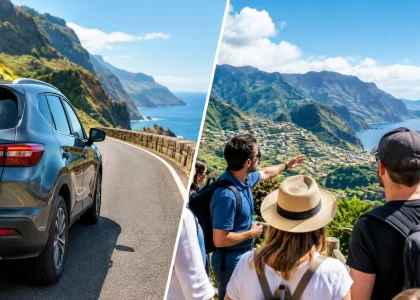

Madeira is small enough to cross in a day, but that is not the best way to experience it. A well-paced Madeira road trip itinerary lets you move from Funchal’s waterfront to high mountain plateaus, black-sand beaches, and quiet coastal villages without turning every day into a race against the clock. Give yourself seven days and keep your plans flexible: island weather can change quickly, and the best viewpoints are often worth revisiting.
The routes below are designed for travelers staying in or near Funchal, but they work just as well with accommodation elsewhere on the island. Each day has one main direction of travel, limiting unnecessary backtracking and making the driving feel more relaxed.
Before You Set Off: Madeira Driving Made Simple
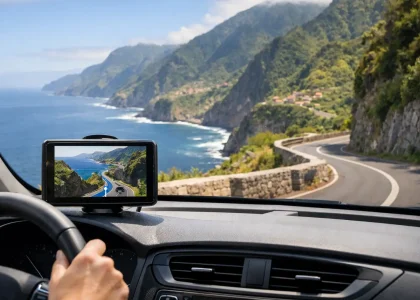
Madeira’s roads are excellent, but they are not always easy. Expect steep gradients, tight village streets, frequent tunnels, and mountain roads where clouds can reduce visibility. A compact car is usually easier to park and maneuver, while a more powerful vehicle can make a noticeable difference if your plans include Pico do Arieiro, Curral das Freiras, or the roads above São Vicente.
Avoid trying to cover the whole island every day. Set your navigation before leaving, allow extra time for photo stops, and use official parking where possible. On narrow uphill roads, take your time and let faster local traffic pass when it is safe. The goal is not to drive quickly – it is to enjoy the freedom to stop when a view, café, or village catches your attention.
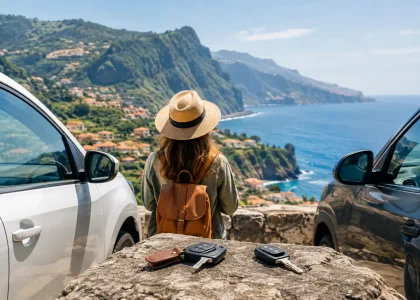
For an easy arrival, arranging airport collection or delivery to your accommodation means you can start on your own schedule. Funchal Car Rental includes full insurance, no excess, unlimited mileage, and 24-hour roadside assistance, helping visitors plan with confidence rather than worrying about unexpected rental costs.
Day 1: Funchal, Monte, and the East Coast
Keep your first day close to Funchal, especially if you have arrived on a late flight. Start with a drive up to Monte, where cooler air and hillside gardens offer a different feel from the city below. Parking can be limited, so arrive earlier in the morning if you want a quieter visit.
From Monte, follow the roads east toward Caniço and Santa Cruz. The coast here is gentler than the island’s dramatic north shore, making it a good introduction to Madeira driving. Stop in Santa Cruz for a coffee near the promenade, then continue to Machico, Madeira’s first landing place and one of the island’s most approachable beach towns.
Machico has a sheltered bay, a sandy beach, and several casual lunch options. If energy allows, continue to Ponta de São Lourenço for late-afternoon views over Madeira’s dry eastern peninsula. The landscape is open, windy, and strikingly different from the lush west. Return to Funchal before dark if this is your first day behind the wheel.
Day 2: Pico do Arieiro and Curral das Freiras
This is a mountain day, so check conditions before you leave. Pico do Arieiro is one of Madeira’s most memorable viewpoints, but it can be completely covered by cloud while the coast is sunny. An early start gives you the best chance of clear views and quieter parking.
The drive itself is part of the experience. As you climb, Funchal disappears beneath you and the road begins to cut through high, rugged terrain. Bring a warm layer even in summer. Temperatures at altitude can feel surprisingly cool, and wind is common.
After Pico do Arieiro, choose between a slower mountain morning or a drive to Curral das Freiras, the Valley of the Nuns. This dramatic village sits deep in a volcanic basin, surrounded by steep green peaks. The descent is steep and winding, but the road is well worth it for confident drivers. Have lunch in the village, then return through Eira do Serrado for one of the best elevated views over the valley.
If mountain roads make anyone in your group uneasy, split these places into separate half-days. Madeira rewards a slower pace.
Day 3: Câmara de Lobos, Cabo Girão, and Calheta
Head west along the south coast, beginning in Câmara de Lobos. Its fishing harbor, painted boats, and compact waterfront make it an easy stop for a morning walk. It is close to Funchal, but the village has a more traditional rhythm.
Continue to Cabo Girão, known for its high sea cliff and glass viewing platform. The views are broad and dramatic on clear days, although visitors uncomfortable with heights may prefer to enjoy the scenery from nearby overlooks instead.
From here, follow the coast toward Ponta do Sol and Calheta. Ponta do Sol is a sunny village with a relaxed seafront, while Calheta has a marina and a man-made golden-sand beach that can be particularly useful for families. This is a good day to leave time unplanned: stop for a swim, settle in for a long lunch, or simply enjoy the changing ocean views from the road.
Day 4: The West Coast and Porto Moniz
Set aside a full day for the island’s west. Drive from Calheta through the lush hills toward Ponta do Pargo, where the land feels wide, rural, and wonderfully quiet. The lighthouse area offers far-reaching Atlantic views, especially on a clear afternoon.
Continue north toward Porto Moniz, famous for its volcanic natural swimming pools. The route can be winding, but it is full of worthwhile scenery. Porto Moniz is a practical lunch stop and a good place to take a break before choosing your return route.
You have two good options. Return via the south coast for an easier, faster drive, or take the north coast through Seixal and São Vicente if the weather is clear and you still have energy. The northern option is more scenic, with steep cliffs, waterfalls, and dense vegetation, but it adds time. Do not force it if rain or fog is setting in.
Day 5: Seixal, São Vicente, and Ribeira da Janela
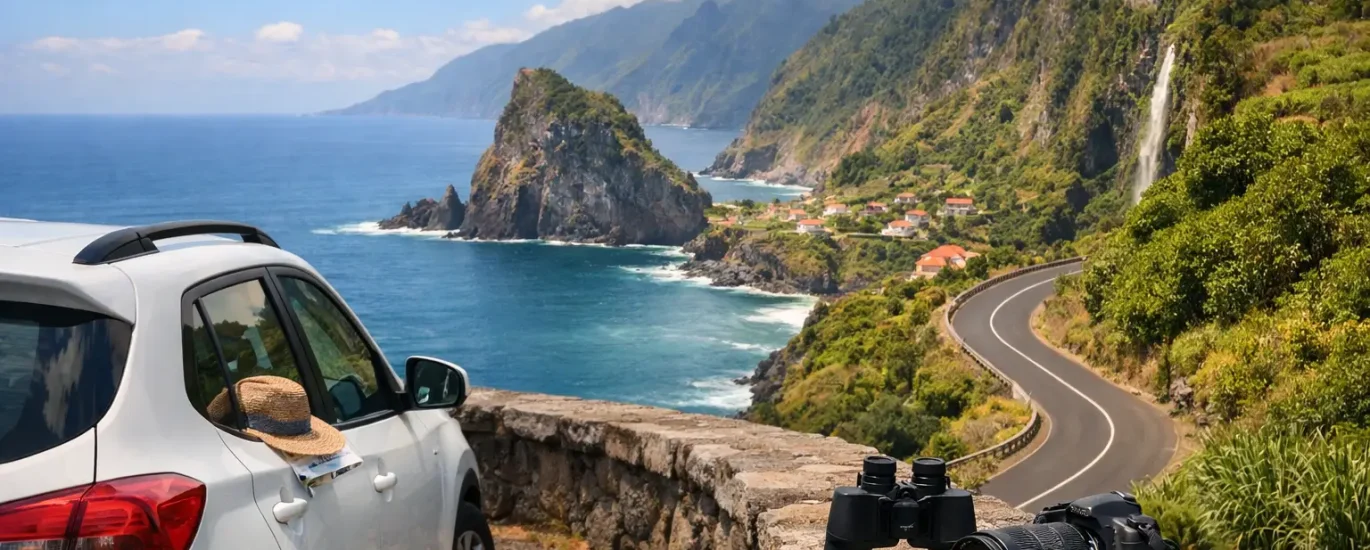
If you did not take the north coast on Day 4, make it the focus today. Seixal is home to one of Madeira’s most photogenic black-sand beaches, framed by green cliffs and mountain slopes. Conditions can be rougher than on the south coast, so treat swimming with caution and follow local guidance.
From Seixal, continue to Ribeira da Janela, where distinctive rock formations rise just offshore. Then drive to São Vicente, a welcoming village in a green valley with restaurants, cafés, and a slower local atmosphere.
This is an ideal day to take your time. The north coast is where Madeira’s volcanic character is easiest to feel: dark rock, powerful ocean, waterfalls after rain, and roads that curve between cliffs and forest. If you are traveling with children, plan fewer stops and allow extra time for snacks, restrooms, and short walks.
Day 6: Levada Country and the Paul da Serra Plateau
For a change of scenery, drive toward the central-western plateau of Paul da Serra. This high, open area often feels more like a windswept countryside than a subtropical island. It is also a useful starting point for several levada walks.
Choose a trail that suits your group, your footwear, and the weather. Not every levada is suitable for young children or travelers uncomfortable with exposure, tunnels, or uneven ground. Carry water, a light rain layer, and a flashlight if your selected route includes tunnels.
After your walk, descend toward Rabaçal, Calheta, or Ponta do Sol depending on where you are staying. Low cloud on the plateau is common, so if visibility is poor, switch plans and spend the day on the sunnier south coast instead. Flexibility is one of the biggest advantages of having your own car.
Day 7: A Free Day for Your Favorite Side of Madeira
Use your final day for the place you rushed through, skipped because of weather, or simply want to see again. Many visitors choose a second visit to Machico or Calheta for beach time, while others return to the mountains for a clearer view from Pico do Arieiro.
If your flight leaves later in the day, keep the route close to Funchal or the airport. Madeira’s tunnels make travel efficient, but mountain weather, roadworks, and scenic detours can still stretch a journey. Build in time for fuel, luggage, and a calm vehicle return.
The best Madeira road trip is not the one with the most pins saved on a map. It is the one with enough room to pull over for a viewpoint, change plans when the clouds move in, and let the island set the pace.