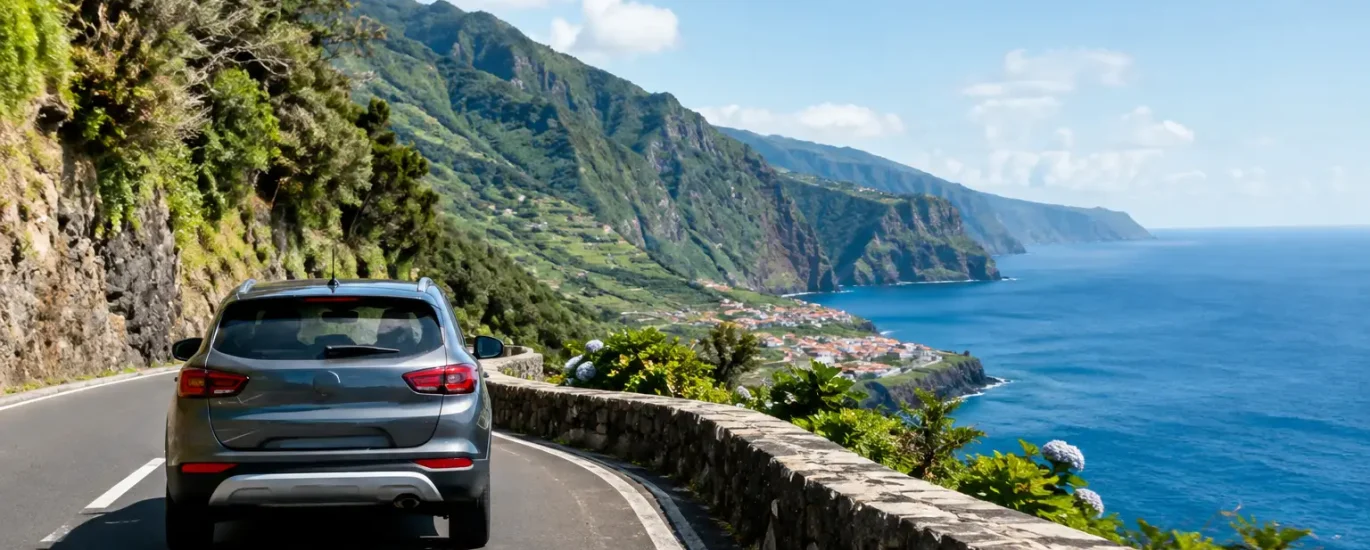
Madeira rewards drivers who stay alert. One minute you may be on a modern expressway above the sea; 15 minutes later, you could be climbing a steep village road with a tight bend, a stone wall, and a local car coming downhill. This Madeira driving rules guide explains the essentials so you can enjoy that freedom with more confidence and less holiday stress.
Madeira driving rules guide: the essentials
Madeira follows Portuguese road law. You drive on the right, overtake on the left, and everyone in the vehicle must wear a seat belt. The steering wheel is on the left side of the car, as it is in the United States.
Drivers must be at least 18 to drive in Portugal, although rental companies may set a higher minimum age or apply conditions for younger drivers. Bring a valid driver’s license and your rental documents whenever you drive. Visitors from the United States can generally use a valid U.S. license for a short visit, but an International Driving Permit can be helpful if your license is not in Roman characters or if you prefer an additional form of identification. Check the current requirements for your own license before travel.
Portugal has strict rules on distracted driving. Holding a phone while driving is not allowed, even when stopped in traffic. Set your route before leaving, use a properly mounted hands-free device if needed, or pull over somewhere legal and safe before checking directions.
Seat belts are compulsory, and children must use the correct age- and size-appropriate restraint. If you are traveling with children, reserve a baby seat, child seat, or booster in advance rather than assuming one will be available on arrival. A familiar, correctly fitted seat makes the first drive from the airport much calmer.
Speed limits and road signs
Speed limits are posted in kilometers per hour, not miles per hour. That matters more than it sounds: 50 km/h is about 31 mph, while 100 km/h is about 62 mph.
As a general guide, the limit is often 50 km/h in built-up areas, 90 km/h on many open roads, and 100 km/h on Madeira’s main expressways. Conditions, road works, tunnels, weather, and local signs can reduce these limits, so the sign at the roadside always takes priority over the general rule.
Do not treat a clear road as an invitation to drive at the maximum posted speed. Madeira’s terrain changes quickly. A road can be dry and wide on one side of a ridge, then wet, shaded, narrow, and sharply curved on the other. On mountain routes, a comfortable speed may be well below the limit.
Road signs use familiar European shapes and symbols. Red circles usually indicate a prohibition or restriction, blue signs provide instructions, and triangular signs warn of hazards ahead. You may see warnings for bends, falling rocks, steep gradients, pedestrians, or animals. Take those signs seriously, especially after rain or in rural areas.
Roundabouts, priority, and steep roads
Roundabouts are common around Funchal, the airport, and larger towns. Traffic already on the roundabout has priority. Slow down on approach, check to your left, and enter only when there is a safe gap.
Use the right lane when taking the first exit or traveling less than halfway around, unless road markings say otherwise. For later exits, move toward the inside lane where appropriate, then signal right and safely return to the outer lane before your exit. Large, busy roundabouts can feel unfamiliar at first, so it is perfectly reasonable to take an extra circuit if you miss an exit rather than cutting across lanes.
At unsigned intersections, traffic approaching from the right may have priority. In practice, many junctions are controlled by signs, markings, or traffic lights, but never assume you have the right of way simply because your road looks larger.
On steep, narrow roads, patience matters more than priority. If two vehicles meet where only one can pass, the driver with the easiest access to a wider section or pull-off will usually give way. This is common local courtesy rather than a situation to force. Avoid stopping on blind corners, and do not reverse without checking carefully for pedestrians, scooters, and cars behind you.
When driving downhill, use a lower gear to control your speed rather than relying constantly on the brakes. It helps prevent brake overheating on long descents and gives you better control through repeated curves. If you are not used to mountain driving, choose main routes for your first day and save the narrowest village roads for daylight.
Tunnels, weather, and visibility
Madeira has an extensive network of tunnels, particularly on the routes linking Funchal with the west and north coasts. Turn on your headlights when entering a tunnel, even if the day is bright. The change from strong island sunlight to tunnel shade can be sudden, and sunglasses can make the first few seconds more difficult.
Keep a safe following distance in tunnels and avoid unnecessary lane changes. If traffic slows, remain calm and follow the overhead signals and lane markings. Never stop in a tunnel except for an emergency.
Weather is one reason Madeira driving needs a little flexibility. Funchal may be warm and sunny while mountain areas are covered in cloud, rain, or fog. Roads can become slippery from moisture, fallen leaves, or mud after heavy rain. If visibility is poor, slow down, use dipped headlights, and leave more space than usual.
Wind can also be strong on exposed coastal stretches and high viewpoints. Keep both hands on the wheel and take extra care when passing buses, trucks, or motorcycles. After periods of heavy rain, follow official closures and warning signs. A closed road is not a shortcut opportunity.
Parking without unwanted surprises
Parking is straightforward when you pay close attention to signs and markings. In Funchal and other busy towns, many curbside spaces are controlled by parking meters or designated zones. Check the instructions nearby, pay for the correct period, and display any required ticket as directed.
Do not park where signs prohibit it, across driveways, on crosswalks, in bus stops, or in spaces reserved for residents or disabled drivers without the required permit. Yellow curb markings or yellow lines generally indicate stopping or parking restrictions. On narrow roads, even a space that looks possible may block traffic, emergency access, or a turning bus.
For popular viewpoints, beaches, and levada walk starting points, arrive earlier than you would for a city attraction. Informal roadside parking can be tempting when lots are full, but it may create a hazard or leave your car exposed to passing traffic. Choose a marked space or continue to a safer area.
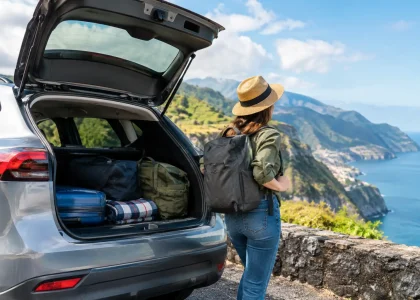
Do not leave valuables visible in the car. Put bags, cameras, and travel documents in the trunk before you arrive, not after you park. That simple habit reduces attention around tourist areas.
Alcohol, fatigue, and local driving habits
Portugal’s standard legal blood alcohol limit is lower than the limit many U.S. visitors are used to: 0.5 g/L. The practical holiday rule is simpler: if you are driving, do not drink. Madeira’s winding roads demand concentration, and even a small amount of alcohol can affect judgment on unfamiliar routes.
Fatigue deserves the same attention. An early flight, a long airport wait, and a late arrival can make the first drive feel harder than expected. If you land tired, keep the route simple, use your navigation before setting off, and take breaks when needed. There is no benefit in rushing to fit sightseeing into your first afternoon.
Local drivers often know the roads extremely well and may travel faster than feels comfortable to a visitor. Let them pass safely when there is a suitable place. Do not speed up to keep pace, and do not stop abruptly to let someone by on a blind curve. A calm, predictable driver is safer than a hurried one.
A stress-free start to your Madeira road trip
Before leaving your pickup point, take two minutes to get comfortable with the car. Adjust your seat and mirrors, locate the lights, wipers, hazard lights, fuel type, and parking brake, and enter your first destination while parked. If you are collecting a manual vehicle and normally drive an automatic, be honest about your comfort level before booking.
Choose a car that suits the roads and your group. A compact vehicle is easier to park and handle on narrow lanes, while a larger vehicle may be more comfortable for families and luggage. The right choice depends on your itinerary: a couple staying around Funchal has different needs from a family planning daily trips to Porto Moniz, Santana, and mountain viewpoints.
Funchal Car Rental keeps the practical side clear with all-inclusive coverage, unlimited mileage, and 24-hour roadside assistance, helping travelers focus on the road ahead rather than surprise rental details. Still, your best protection is sensible driving, careful parking, and allowing extra time for every mountainous route.
The island is meant to be enjoyed at an unhurried pace. Let faster traffic go, pull over when a view deserves your attention, and make each turn with time to spare. That is how a rental car becomes more than transport – it becomes your comfortable way to see Madeira on your own terms.