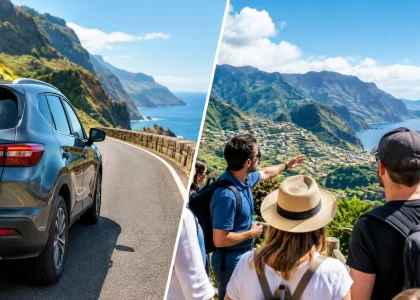
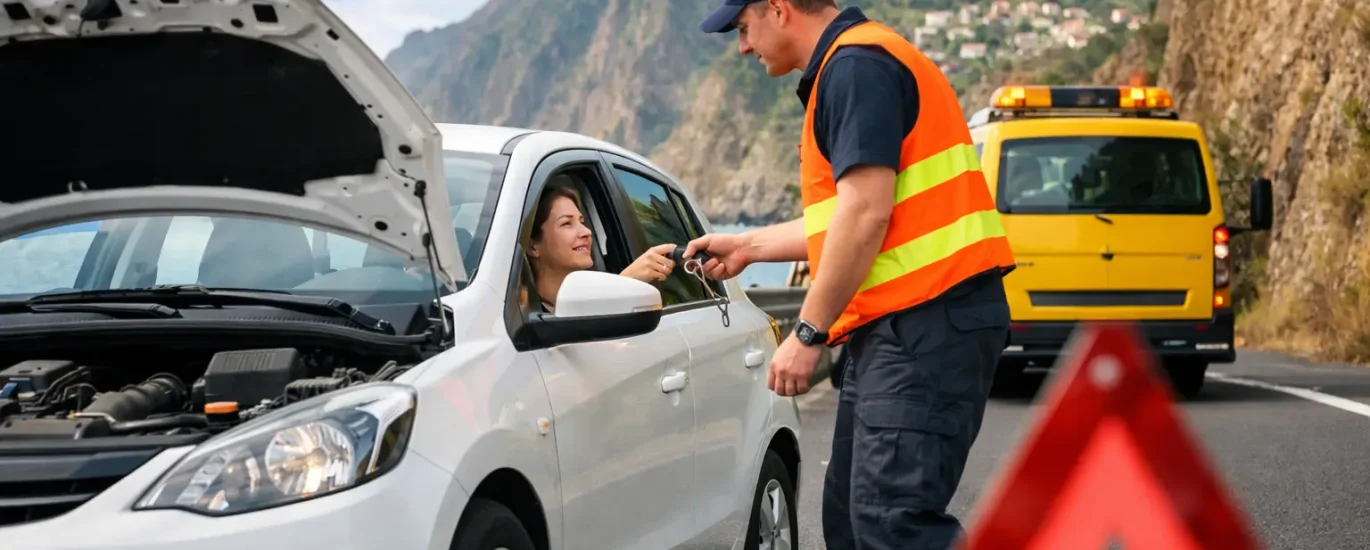
A stalled car on a steep road above Câmara de Lobos is not how anyone plans to spend an afternoon in Madeira. Madeira car rental roadside assistance is there for precisely these moments, giving you a clear route to help when a mechanical issue, flat tire, or other unexpected problem interrupts your plans.
For visitors, the value is not just the repair itself. It is knowing what to do, who to call, and that you will not be left trying to arrange support in an unfamiliar place. When roadside assistance is included with your rental, you can set off for the island’s viewpoints, beaches, levada walks, and villages with more confidence.
What Madeira car rental roadside assistance covers
Roadside assistance is support provided when the rental vehicle cannot be driven safely or normally. Depending on the situation, this may mean help at the roadside, recovery of the vehicle, a tow to a suitable location, or instructions on the next step.
The most common reasons travelers need assistance are mechanical faults, battery issues, warning lights, overheating, and tire damage. A rental car can also need support after a minor accident, even when it is still physically driveable. In that case, the priority is usually safety, documenting what happened, and following the rental company’s instructions before continuing your journey.
At Funchal Car Rental, 24-hour roadside assistance is included as part of the all-inclusive rental approach, alongside full insurance, Super CDW, personal accident insurance, unlimited mileage, and no excess. This matters because it removes one of the usual uncertainties of renting a car abroad: whether help will become an expensive extra at the moment you need it.
Coverage does not mean every situation is identical. If damage resulted from driving contrary to the rental agreement, using unsuitable roads, ignoring a warning light, or putting the vehicle at risk, the process may be different. The practical rule is simple: stop safely, contact the rental provider promptly, and do not attempt a repair or recovery on your own unless you are specifically instructed to do so.
Why roadside help matters more in Madeira
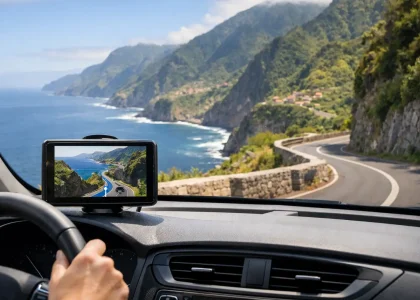
Madeira is wonderfully compact, but its roads are not always simple. You may drive from sea level to high mountain viewpoints in a short time, pass through tunnels, climb sharp inclines, and encounter narrow roads in older villages. The island rewards independent travel, yet those same conditions make a dependable support plan particularly reassuring.
A warning light that might feel manageable on a flat suburban road deserves more attention on a steep route or in changing mountain weather. If the car loses power, the brakes feel unusual, steam appears from the engine, or a tire looks damaged, pull over where it is safe and seek assistance. Continuing because you are close to your hotel or viewpoint can turn a small issue into a larger one.
Weather also changes by area and elevation. Funchal may be warm and bright while the mountains are wet, misty, and cooler. Rain can make rural roads slippery, and low cloud can reduce visibility. These conditions do not mean you should avoid exploring Madeira. They simply make calm driving, sensible route choices, and access to 24-hour support more valuable.
What to do if your rental car has a problem
Your first decision should always be about safety. Turn on your hazard lights and pull into a safe place if the vehicle is still moving normally enough to do so. Avoid stopping on a blind bend, in a narrow lane, or where other drivers cannot see you clearly. If you are on a steep road, keep the car secure and do not stand downhill from it.
If there has been an accident or anyone is injured, contact the emergency services first. Then call the rental provider as soon as you can. For a breakdown without injuries, contact roadside assistance directly using the number supplied with your rental documents or handover information.
When you call, be ready to share your location, the vehicle registration number, and a short explanation of the problem. A phone map location, nearby hotel, village name, tunnel exit, or recognizable landmark can help the team find you faster. If it is safe, take photos of any warning lights, tire damage, or collision damage before the vehicle is moved.
Do not leave the vehicle unattended without being told to do so. You should also avoid accepting repairs from an unknown garage before speaking with the rental company. Local support can advise whether a technician will come to you, whether the vehicle needs recovery, or whether another car can be arranged.
For a flat tire
Do not keep driving on a visibly flat or damaged tire. Pull over safely and call for advice. Changing a tire beside a narrow or busy road can be unsafe, especially in rain, darkness, or on an incline. Roadside assistance exists so you do not have to take unnecessary risks to keep the itinerary moving.
For warning lights or overheating
A red warning light, a strong burning smell, smoke, steam, or an unusual loss of power calls for an immediate stop in a safe place. Turn off the engine if appropriate and allow the vehicle to cool. Do not open a hot radiator cap or add fluids unless the support team tells you to do so. Modern cars can display alerts for many reasons, and a quick call is better than guessing.
After a minor accident
Move to a safe position where possible, check that everyone is okay, and document the scene. Exchange required information with the other party, but do not admit fault at the roadside. Contact the rental provider for the next steps, even if the damage appears minor. Scratches, cracked lights, and wheel damage can be easy to underestimate.
Prepare before leaving the pickup point
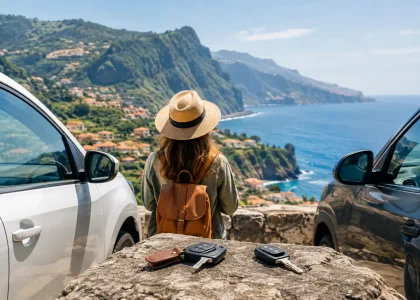
A few minutes at collection can make a stressful moment much easier later. Save the assistance number in your phone before you begin driving. Ask where the rental documents are kept, confirm how to report an issue outside office hours, and make sure you understand the fuel type for your vehicle.
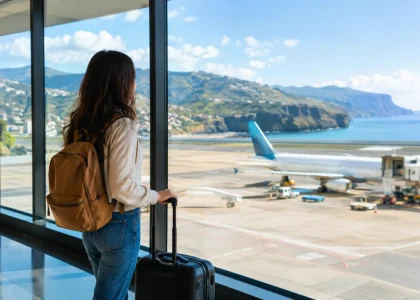
It is also worth taking a quick walk around the car with the representative. Check existing marks, note the condition of the tires, and make sure you know how to use the lights, windshield wipers, hazard lights, and parking brake. Travelers arriving on a late flight may be tired, so this small check is especially helpful before setting out from Funchal Airport.
Families should confirm that baby seats, child seats, or boosters are fitted securely before departure. If you are traveling with a group, agree that every approved driver knows where the rental documents and roadside assistance details are stored. A calm response is much easier when everyone knows the plan.
How to reduce the chance of needing help
Roadside assistance is a safety net, not a substitute for careful driving. Madeira’s roads are best enjoyed at an unhurried pace. Use lower gears on steep descents where appropriate, leave extra room in wet conditions, and do not rely on the car ahead to show you whether a narrow road is suitable.
Choose routes that match your confidence level and vehicle. Some scenic roads are steep, tight, or less comfortable for drivers who are unfamiliar with mountain terrain. There is often more than one way to reach a destination, and the fastest route is not always the most relaxing one. If your plans include remote hiking areas, check your route and avoid taking a rental car onto unpaved or restricted tracks.
Fuel planning matters, too. Do not let the tank run very low while exploring the north coast or higher areas of the island. Keep your phone charged, carry water, and let someone in your party know the day’s route. These are simple habits, but they make an unexpected delay much less disruptive.
The reassurance behind a hassle-free rental
Good roadside assistance is about more than a phone number. It is the confidence that there is a local team ready to help when your plans change, whether you are near your accommodation in Funchal, arriving late at the airport, or enjoying a quieter corner of the island.
Before you drive away, keep the support details handy, drive to the conditions, and give yourself time for Madeira’s hills and curves. Then, if the unexpected happens, you can focus on staying safe while the right help gets you back to enjoying every moment of your trip.