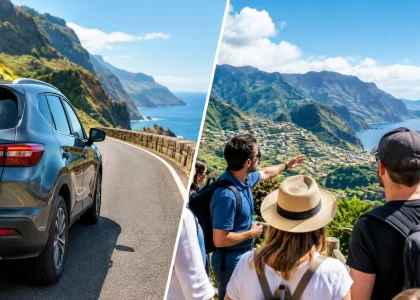

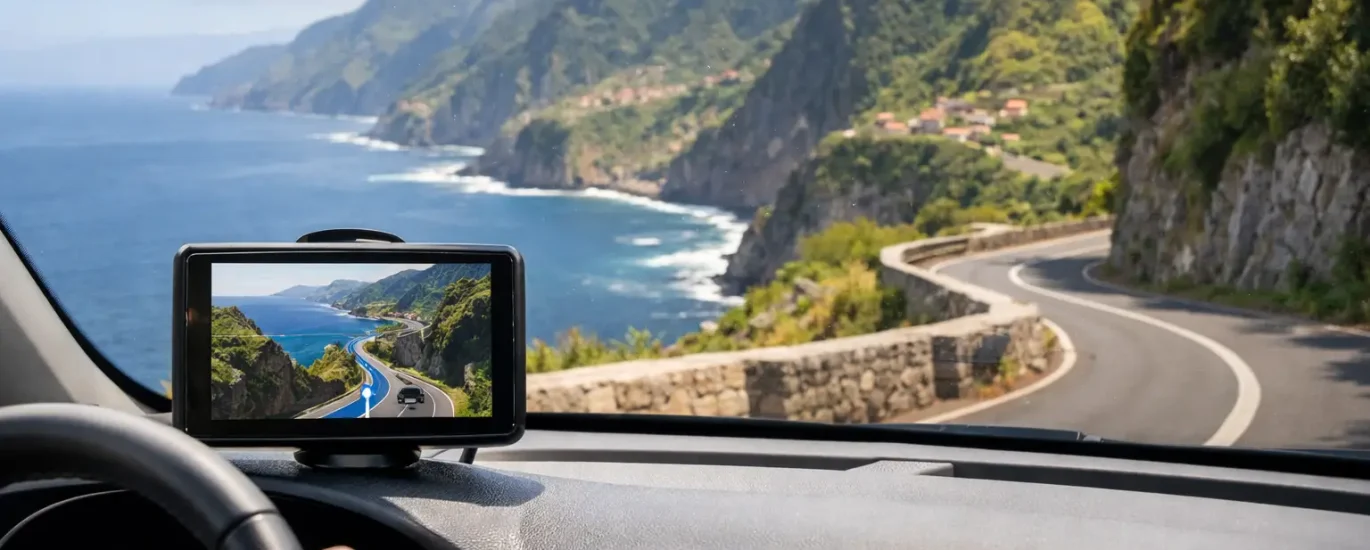
A Madeira car rental GPS can make the first hour of your vacation much easier, especially if you are leaving Funchal Airport after a long flight, arriving at night, or heading straight to an accommodation outside the city. Madeira is compact, but it is not a simple island to drive by instinct. Roads climb quickly, tunnels connect distant areas, and a wrong turn can put you on a narrow, steep lane sooner than expected.
The good news is that you do not need advanced navigation skills to explore independently. You simply need a navigation setup that works reliably for your itinerary, your phone plan, and your confidence behind the wheel. For some travelers, a dedicated GPS is the most stress-free choice. For others, offline phone maps are enough. The right answer depends on how and where you plan to drive.
When a Madeira car rental GPS is worth having
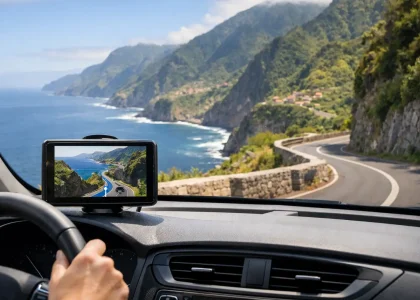
A rental GPS is particularly useful for first-time visitors who want clear directions from the moment they collect their car. Instead of arranging a local data plan, downloading maps, mounting a phone, and managing battery life, you can enter your destination and start driving.
It is also a sensible choice if your hotel, villa, or guesthouse is in a quieter part of the island. Addresses in Madeira do not always work as neatly as a street address in a large US city. Some properties sit above a village, at the end of a small access road, or along a route with several similar turns. A GPS with the accommodation address already confirmed can remove a lot of arrival-day pressure.
Families often appreciate the simplicity, too. When children are tired after a flight, the last thing most parents want is to troubleshoot a phone connection while trying to find a child-friendly restaurant or their accommodation. A separate screen lets the passenger handle directions while keeping the driver’s phone free for calls, photos, and practical travel messages.
Funchal Car Rental offers GPS devices as an optional extra, so you can add one when making your booking if you would rather not depend on your mobile phone. Confirming this before arrival is a good idea during busy travel periods, particularly if GPS navigation is central to your plans.
GPS versus phone maps in Madeira
Phone maps work very well on much of the island, and many repeat visitors use them without any problem. If you have reliable mobile data, a charged phone, and a secure hands-free mount, a mapping app can provide current traffic information and easy destination searches. It is often the most familiar option for travelers who already use navigation at home.
The trade-off is dependence on your phone. Madeira has strong coverage in many towns and on main roads, but signal can be less dependable in remote mountain areas, deep valleys, and some stretches near hiking access points. Tunnels can also briefly interrupt a connection. If your map requires a live signal, that interruption can be inconvenient just when several exits or turns are close together.
Offline maps solve much of this problem. Download the Madeira map area before your flight, search and save your accommodation, rental collection point, restaurants, parking areas, and major attractions while you have Wi-Fi. Then test the app in airplane mode. If it can still create a route, you are prepared for a day without dependable data.
A dedicated GPS provides that same independence from mobile data, but it may not always have the same real-time traffic information or the wide range of recent reviews and business updates found in a phone app. Neither option is automatically better. A GPS is often better for simplicity and reliability, while a phone can be better for flexible searches during the day.
Madeira roads make route choices matter
The fastest route is not always the route you will enjoy most. Madeira’s modern expressways and tunnels make many journeys surprisingly quick, particularly along the south coast. But navigation systems can also suggest older regional roads that are scenic, narrow, winding, or steep. That can be exactly what you want, or exactly what you want to avoid.
Before starting a drive, take a few seconds to review the full route rather than accepting the first option. If you are traveling from Funchal to Porto Moniz, for example, a route through the island can be efficient but may involve mountain driving. A coastal route may feel more relaxed in some conditions but can take longer. Weather, your comfort level, and the time of day all matter.
Do not assume a short distance means a short drive. On a map, a viewpoint or levada trail can appear close to your hotel. In reality, the route may include sharp bends, elevation changes, limited parking, and a final section on a smaller road. Build extra time into your plans, especially for sunrise viewpoints, trailheads, and dinner reservations outside Funchal.
Navigation is a guide, not a substitute for road awareness. Watch local signs, speed limits, lane markings, and parking restrictions. If a suggested turn looks too narrow, too steep, or unsuitable for your vehicle, continue safely and let the route recalculate. Never reverse or stop suddenly because the GPS gave late instructions.
Set up your navigation before you leave
The easiest route is the one you prepare before the car starts moving. Whether you choose a rental GPS or your phone, set your first destination while parked at the airport, accommodation, or delivery location. Drivers should not hold or operate a phone while driving, so let a passenger manage changes whenever possible.
A little preparation is especially helpful for island days that involve more than one stop. Save each place in the order you expect to visit it, but leave room to adjust. Mountain weather changes quickly, viewpoints can be covered by cloud, and a beach or trail parking area may be busier than expected. A flexible plan is far more enjoyable than trying to force a rigid route.
Before your first drive, make sure you have these practical details ready:
- Your accommodation name, full address, and contact number.
- The rental return point or agreed drop-off location.
- Offline map coverage or a GPS that is switched on and set to English.
- A charging cable, car charger, or fully charged backup battery for phone navigation.
- Saved locations for your planned fuel stop, parking area, and main destination.
If you are using your phone, place it where you can glance at it without blocking your view. Avoid balancing it in a cup holder or against the windshield. Madeira’s curves and hills can quickly send an unsecured phone sliding across the car.
Tips for navigating beyond Funchal
Funchal is the easiest place to get comfortable with your navigation setup. Roads are busier, but services, gas stations, parking garages, and recognizable landmarks are close by. Once you head west toward Calheta and Ponta do Sol, east toward Machico and Santana, or north toward São Vicente and Porto Moniz, it helps to be more deliberate.
For mountain routes, start with plenty of daylight if possible. GPS directions are easier to follow when you can see road edges, signs, and approaching bends clearly. Fog and low cloud can reduce visibility around higher elevations, even when the coast is sunny. If conditions feel uncomfortable, choose a lower route or change plans. Madeira is full of worthwhile alternatives.
Use specific destination names where you can. Instead of searching only for a village, search for the exact parking lot, hotel, trailhead, or attraction. This reduces the chance that a navigation system sends you to the center of town when your intended stop is several miles away on a hillside.
For hiking days, do not rely on a GPS alone to judge whether a road leads directly to the trail. Some popular walks have designated parking areas, shuttle arrangements, or limited roadside space. Check your planned access details before setting off, and never leave the car where it blocks a lane, driveway, or emergency access.
Small habits that make driving calmer
Keep navigation prompts audible, but not so loud that they become distracting. On steep roads, your attention belongs on the road, not on the next instruction. If you miss a turn, stay calm and keep moving safely. Most systems will reroute within seconds, and a detour is usually far less stressful than an unsafe maneuver.
It also helps to agree on roles before a longer day trip. One person drives, one person checks the route, and everyone knows the next major stop. That simple arrangement prevents last-minute debates at roundabouts and keeps the trip feeling like a vacation rather than a test of navigation.
Choose the setup that lets you look up more than down. With a prepared GPS or properly downloaded phone map, you can spend less time worrying about the next turn and more time enjoying Madeira’s coast, villages, and mountain views.